When Ragas Meet Requiems: How Indian Vocal Traditions Are Quietly Transforming American Choral Music
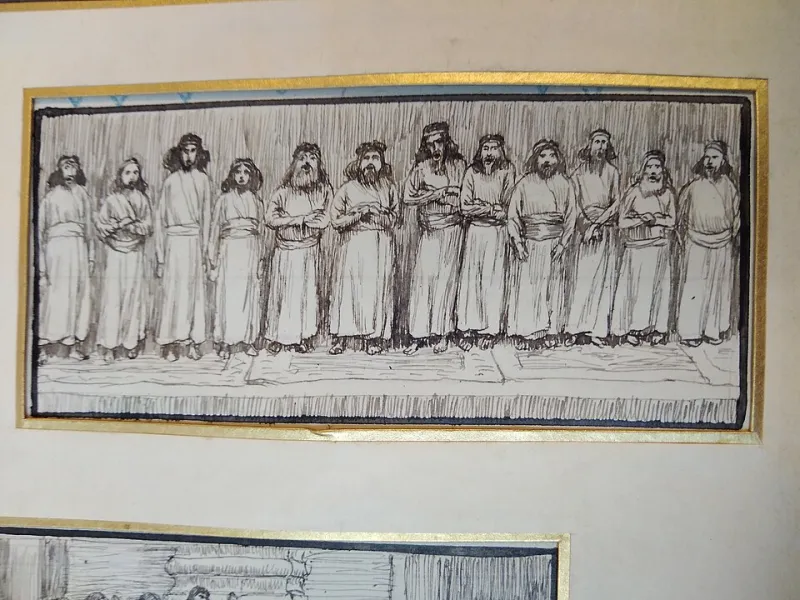
Photo: James Tissot, Public domain, via Wikimedia Commons
There's a moment in every Bangalore Choir rehearsal when something clicks. A soprano hits a gamaka — that subtle, shimmering ornament central to Carnatic singing — and suddenly the whole ensemble sounds different. Fuller. More alive. It's not a trick or a novelty. It's the sound of two worlds finally listening to each other.
And it turns out, American choral music is starting to listen too.
Over the past decade, a quiet but significant shift has been unfolding inside concert halls, conservatories, and community choirs across the US. Directors and composers are looking beyond the European classical tradition for fresh ideas, and many of them are landing squarely in the rich, intricate world of Indian vocal music. What they're finding there is changing the way they think about harmony, rhythm, and what a choir can actually do.
The Techniques Making Waves
Let's get specific, because this isn't just a vibe shift — it's a technical revolution.
Microtonal ornamentation is probably the most immediately noticeable Indian influence creeping into Western choral writing. Western music largely operates within a 12-tone equal temperament system. Indian classical music, by contrast, recognizes 22 shrutis — microtonal intervals that fall between the notes most Western singers are trained to hit. When a Carnatic vocalist slides between pitches or bends a note with precision, they're navigating a sonic landscape that standard choral training simply doesn't map.
For American choirs attempting fusion, this creates an interesting challenge. Directors like those we work with here at Bangalore Choir often describe the learning curve as "unlearning before relearning." Singers who've spent years locking into equal temperament have to develop new muscle memory — literally a different relationship with pitch.
Rhythmic complexity is the other big one. Hindustani and Carnatic music feature elaborate rhythmic cycles called talas, some spanning 16 beats, others stretching to 108. These aren't just time signatures — they're philosophical frameworks for how music breathes and moves. Western choral music, even at its most sophisticated, tends to operate in relatively predictable metric grids. Introducing tala-based rhythmic thinking opens up possibilities that composers like Reena Esmail — a Los Angeles-based composer who explicitly bridges these traditions — have been exploring to remarkable effect.
Esmail's work has been performed by the LA Master Chorale and several university ensembles, and she's frequently cited by younger American choral directors as evidence that this fusion isn't just possible — it's genuinely compelling to audiences.
What Musicologists Are Saying
Academics have been paying attention too. Ethnomusicologists at institutions like the University of Washington and the University of Michigan have noted a broader "decolonization" impulse within Western art music that's encouraging composers and directors to treat non-European traditions as sources of serious artistic innovation rather than exotic color.
The distinction matters. There's a long, uncomfortable history of Western composers borrowing surface-level elements of Indian music — a sitar sound here, a pentatonic melody there — without engaging with the deeper structural logic underneath. What's different now is that more collaborations are happening with Indian musicians as genuine co-creators, not just consultants or inspirations.
For us at Bangalore Choir, this is deeply personal. Our ensemble was built on the premise that Indian vocal artistry deserves a full seat at the global music table — not a footnote, not a cameo. When we see American music schools beginning to teach Carnatic vocal techniques as part of their core curriculum, it feels like a long-overdue acknowledgment.
US Music Schools Are Paying Attention
Several prominent American conservatories have begun incorporating Indian classical vocal studies into their programs, either as electives or as part of broader world music requirements. Berklee College of Music in Boston has long had a global music program, and Indian classical music has become one of its more robust offerings. The New England Conservatory has hosted visiting Carnatic vocalists for masterclasses that draw students from across departments.
What's interesting is who's showing up to these sessions. It's not just ethnomusicology students or world music enthusiasts. Choral performance majors, composition students, and even opera singers are attending — because they're recognizing that these techniques offer something they can't get from their standard training.
The gamaka, for instance, teaches a kind of expressive flexibility that makes Western singers more dynamic performers across the board. Learning to navigate microtonal space improves intonation sensitivity. Studying tala deepens rhythmic awareness in ways that translate directly to complex contemporary Western scores.
The Bangalore Connection
It's worth pausing to appreciate why Bangalore, specifically, has become such a significant node in this global conversation. The city has long been home to some of India's most innovative musical experimentation — a place where Carnatic tradition meets jazz clubs, where classical vocalists collaborate with electronic producers, where the old and new coexist with unusual creative energy.
That spirit is baked into everything Bangalore Choir does. Our performances don't treat Indian and Western traditions as separate categories that occasionally overlap. We treat them as a single, evolving musical conversation — one that's been going on for longer than most people realize, and one that's getting richer by the year.
When we perform at cross-cultural festivals or collaborate with American ensembles, we're not translating Indian music into a Western framework or vice versa. We're finding the places where both traditions are genuinely curious about each other — and building there.
Why This Matters for American Audiences
Here's the thing about American choral audiences: they're hungry for something new. Attendance at traditional classical concerts has been declining for years, and arts organizations across the country are searching for ways to bring new listeners through the door without alienating their existing base.
Fusion choral music — done thoughtfully, with real artistic depth — turns out to be a compelling answer. Audiences who might not have a strong relationship with either Indian classical music or Western choral tradition often find the combination genuinely accessible. The familiar and the unfamiliar create a kind of productive tension that keeps listeners engaged in ways that purely traditional programming sometimes doesn't.
We've seen this firsthand. When Bangalore Choir has performed stateside or collaborated with American groups, the post-show conversations are electric. People want to know what they just heard. They want to understand the techniques. They leave with questions — which is exactly what great music should do.
Looking Ahead
The influence of Indian vocal traditions on Western choral music isn't a trend that's going to fade when the next aesthetic movement comes along. It's structural. It's changing how composers write, how directors teach, and how singers understand their own instruments.
For anyone involved in choral music — whether you're a professional singer, a director, a student, or just someone who loves sitting in the audience — this is an exciting moment to be paying attention. The walls between traditions are coming down, and what's emerging on the other side is some of the most interesting vocal music being made anywhere in the world right now.
And a lot of that conversation runs straight through Bangalore.