Wired for Raga: How New Venue Tech Is Giving Indian Classical Vocals Their American Moment
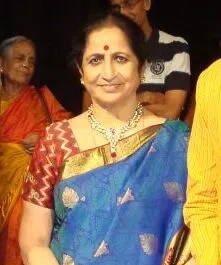
Photo: Shaji Mathew, CC BY-SA 2.0, via Wikimedia Commons
There's a moment that Priya Nair, a soprano with Bangalore Choir, describes almost like a spiritual experience. She was standing on stage at a mid-sized performing arts center in Austin, Texas, running a soundcheck before an evening show. The sound engineer had spent the better part of an hour tweaking reverb settings and mid-range EQ curves. When she finally opened her mouth and let a meend — that slow, liquid glide between notes that defines Hindustani classical singing — travel across the room, she stopped mid-phrase.
"It landed," she says. "The whole room just... held it. I've never felt that in a Western venue before."
That feeling, it turns out, is no accident. And it's happening more and more.
The Original Design Problem
Indian classical vocals weren't built for enclosed spaces. Historically, performances happened in open-air sabhas, temple courtyards, and outdoor concert grounds where sound could travel freely in every direction. The vocal techniques that developed over centuries — the intricate gamaks (rapid oscillations), the breathy, intimate taan passages, the microtonal inflections that sit between the notes Western ears are trained to expect — were all shaped by that acoustic freedom.
Drop those same techniques into a traditional Western concert hall, and things get complicated fast. The hard, parallel walls that work beautifully for a Beethoven symphony can muddy the delicate ornamentation of a Carnatic kriti. The reverb tails that give a choir's choral blend its warmth can swallow the precise pitch nuances that make a raga meaningful. For decades, Indian classical artists performing in American venues faced a frustrating choice: compromise the music or fight the room.
"You'd hear singers pulling back," says Rajan Subramanian, one of Bangalore Choir's music directors. "Simplifying. Avoiding the more complex ornamental phrases because they knew the room wouldn't carry them. It was like trying to paint a watercolor in a thunderstorm."
What Changed in the Sound Booth
The shift has been gradual but unmistakable. Modern concert hall design has moved away from the rigid, shoe-box acoustics that dominated the 20th century. Variable acoustic systems — think motorized ceiling panels, deployable curtains, and tunable wall surfaces — are now standard features in newer performing arts centers across the US. Venues like the Bing Concert Hall at Stanford, the Kauffman Center in Kansas City, and a growing number of mid-tier regional halls have invested heavily in systems that let engineers dial in the acoustic profile for each individual performance.
At the same time, audio technology has taken enormous leaps. Directional microphone arrays, digital signal processors capable of isolating specific frequency ranges in real time, and spatial audio mixing boards that used to cost a fortune are now accessible to mid-budget touring productions. Engineers who once had a single blunt tool — turn it up or turn it down — now have something closer to a surgical kit.
For Indian classical vocals, this matters enormously. The gamak, for instance, sits in a frequency range that older analog systems often treated as noise to be filtered out. Modern digital processing can recognize and preserve it. The result is that an audience in Denver or Philadelphia can now hear what a raga actually sounds like — not a flattened, acoustically compromised version of it.
Learning to Trust the Room
For Bangalore Choir members who've spent years performing in India and touring internationally, adapting to American venues has required a genuine mental shift — not just a technical one.
"In Bangalore, you learn to project," says vocalist Deepa Krishnamurthy. "You're taught to fill a space with your voice, to carry it. When I first started performing in American halls with proper mic setups, I kept oversinging. I was fighting a room that was already on my side."
That recalibration — learning to trust the technology rather than muscle through it — is something several choir members describe as a turning point. Once they stopped compensating and started collaborating with the room, something opened up. Subtle phrases that would have been lost in a less capable space began landing with audiences. Post-show conversations shifted. People who'd never heard Carnatic music before started asking specific questions — about that note that seemed to bend, about the pattern that kept almost-repeating-but-not-quite.
"That's the microtonal stuff," Rajan explains with a grin. "That's the raga doing its job. When the room lets it through, people feel it even if they can't name it."
The Cultural Timing Is Right Too
Technology alone doesn't explain the moment. American concert audiences have been quietly expanding their listening vocabularies for years. The global music boom on streaming platforms has meant that a twenty-something in Nashville might have a playlist that moves from Lizzo to Ilaiyaraaja without a second thought. Indian film music, yoga playlists saturated with classical-adjacent sounds, and a growing South Asian diaspora that fills seats and shapes programming decisions at major venues — all of it has been shifting the baseline.
"Five years ago, we'd sometimes feel like we had to introduce ourselves from scratch at every show," says Priya. "Now people come in with some context. They've heard something somewhere. They're curious, not cautious."
That cultural readiness, combined with venues that can actually deliver the sonic experience, creates what Rajan calls a "compound opportunity." The music doesn't have to fight the room AND the audience at the same time anymore.
What Bangalore Choir Is Doing With It
For the group, this convergence has shaped how they approach programming for US tours. Sets are built to take advantage of the acoustic range modern halls offer — opening with pieces that showcase the choir's blend in fuller, more immediately familiar harmonies, then gradually introducing the classical Indian elements as the audience settles in and the sound engineer has a feel for the room's behavior that evening.
"It's a conversation," Deepa says. "With the audience, with the venue, with the engineer. Every show is a little different."
That flexibility — rooted in classical training but genuinely responsive to each performance context — might be exactly what makes this crossover moment feel less like a trend and more like something that's here to stay. The technology caught up. The audiences are ready. And the music, which was always this rich and this intricate, finally has a room worthy of it.
Next time you're at a Bangalore Choir show and you hear that long, gliding note settle into the hall like it belongs there — it does. It just needed the right wiring to find its way home.