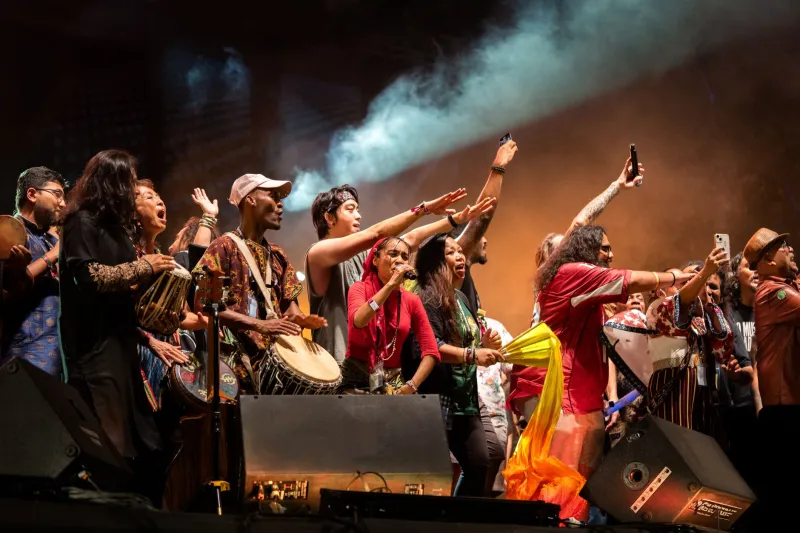
How One Choir from Bangalore Accidentally Became America's First Taste of Raga
The Night Everything Changed
It wasn't a sold-out Carnegie Hall debut. It wasn't a Grammy nomination or a viral TikTok moment. For a lot of Americans, their first real encounter with raga happened in a mid-sized venue on a Tuesday night—maybe a university auditorium in Austin, a performing arts center in Minneapolis, or a community hall in suburban New Jersey. And almost every single one of them walked out asking the same question: Why hasn't anyone played this for me before?
That reaction—equal parts wonder and mild betrayal—has become something of a signature for Bangalore Choir audiences. The ensemble has spent the better part of a decade quietly doing what Indian classical music institutions spent decades insisting couldn't be done: making raga feel immediately, viscerally relevant to ears raised on rock, country, jazz, and hip-hop.
So how did they pull it off when so many others couldn't?
The Problem Nobody Wanted to Admit
Let's be honest about something. Indian classical music has a perception problem in the United States that has nothing to do with its quality. The music itself is staggeringly sophisticated—melodically rich, rhythmically intricate, emotionally layered in ways that Western classical traditions genuinely haven't explored. But the way it was typically presented to American audiences for decades felt, to put it bluntly, like homework.
The stage setups were sparse. The introductory lectures were long. The expectation that listeners should already understand the difference between Bhairavi and Yaman before enjoying the performance created a gatekeeping effect that kept casual music lovers at arm's length.
Bangalore Choir's founding members saw this clearly, and they weren't particularly diplomatic about naming it. "We weren't trying to dumb anything down," says one of the group's original artistic directors. "We were trying to take down the velvet rope. There's a difference."
Deliberate Choices, Not Happy Accidents
The ensemble's early creative decisions look almost surgical in retrospect. They kept the melodic vocabulary firmly rooted in Carnatic tradition—no watering down of ragas, no swapping out complex rhythmic cycles for simpler Western time signatures. The authenticity was non-negotiable. But everything surrounding the music was rethought from scratch.
Setlists were sequenced like albums rather than academic demonstrations. Pieces that opened with immediately recognizable emotional textures—longing, celebration, stillness—came first, giving audiences an emotional handhold before the deeper complexities unfolded. Spoken introductions were kept brief, conversational, and deliberately free of jargon. When a vocalist explained a raga, it sounded less like a music theory lecture and more like a friend describing a feeling they'd been carrying around all week.
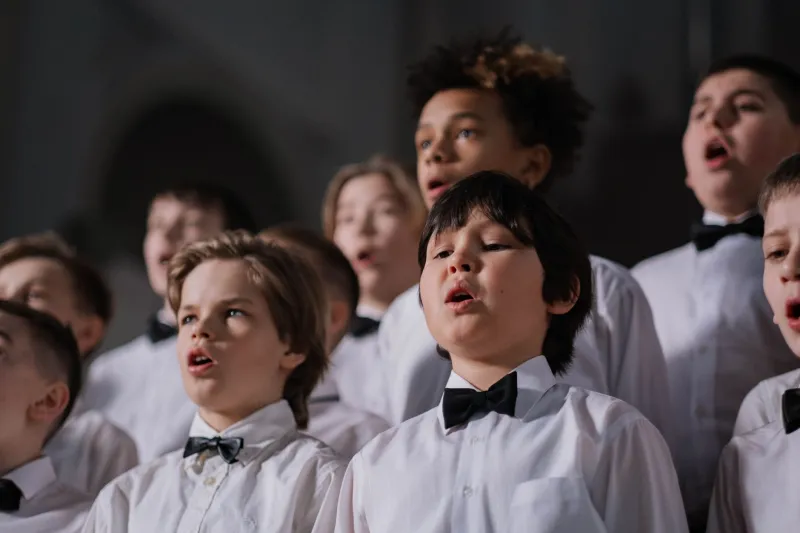
The choral format itself was a strategic masterstroke. American audiences are deeply comfortable with group vocal performance. Choirs are embedded in church culture, school culture, holiday culture. By presenting Indian classical music through an ensemble of voices rather than a solo artist with instrumental accompaniment, Bangalore Choir offered a familiar container for unfamiliar content. The sound was new. The experience of watching and listening to a choir was not.
What the Founding Members Actually Wanted
Sit down with the people who built this thing from the ground up and you'll notice something: they're not particularly interested in being credited with a cultural breakthrough. What they talk about instead is a specific frustration they shared as musicians trained in both Carnatic and Western traditions.
They had spent years watching Indian classical music be either over-explained or under-contextualized in American settings. Either audiences were treated like students who needed to pass a test, or the music was dropped into a world fusion context that stripped out everything that made it distinctive. Neither approach left room for the music to just be itself in front of people who were hearing it fresh.
"The raga doesn't need defending," one founding member explained during a rehearsal conversation. "It doesn't need to be simplified. It needs to be trusted. We just had to trust that if we brought people close enough to it, they'd feel what we feel."
That philosophy—trust the music, lower the barriers, don't compromise the core—became the ensemble's unofficial operating principle.
The Moment the Audience Started Following
Breakthrough moments in music are rarely as clean as the stories we tell about them later. But there are specific performances that Bangalore Choir insiders point to as turning points—evenings when something shifted in the room and the ensemble could feel the audience stop merely listening and start leaning in.
A festival appearance in the Pacific Northwest where a crowd that had shown up mostly for a headlining jazz act ended up staying two hours past schedule. A university concert in the Midwest where students who had never heard the word raga before started Shazam-ing mid-performance. A private corporate event in San Francisco where the post-show conversation went so long that the catering staff gave up and went home.
In each case, the response wasn't polite appreciation. It was the kind of unsettled excitement that happens when something genuinely new enters your nervous system.
Why This Matters Beyond the Music
The Bangalore Choir phenomenon is bigger than one ensemble's success story. What it demonstrates is that American audiences are not, in fact, resistant to Indian classical music. They were resistant to the way it was being offered to them—at a distance, behind glass, with a docent explaining what they were supposed to feel.
Remove the distance, and the music does what it has always done: it moves people. That's the lesson. And it's one that choirs, presenters, and festivals across the country are slowly starting to absorb.
For the millions of Americans who found their way into raga through a Bangalore Choir performance, the journey rarely stops there. They start asking questions. They look up recordings. They show up to other Indian classical concerts. They bring friends. The gateway, once opened, tends to stay open.
And that, more than any single performance or accolade, is probably the ensemble's most lasting contribution.