Solo No More: Why Trained American Vocalists Are Trading the Spotlight for Something Better
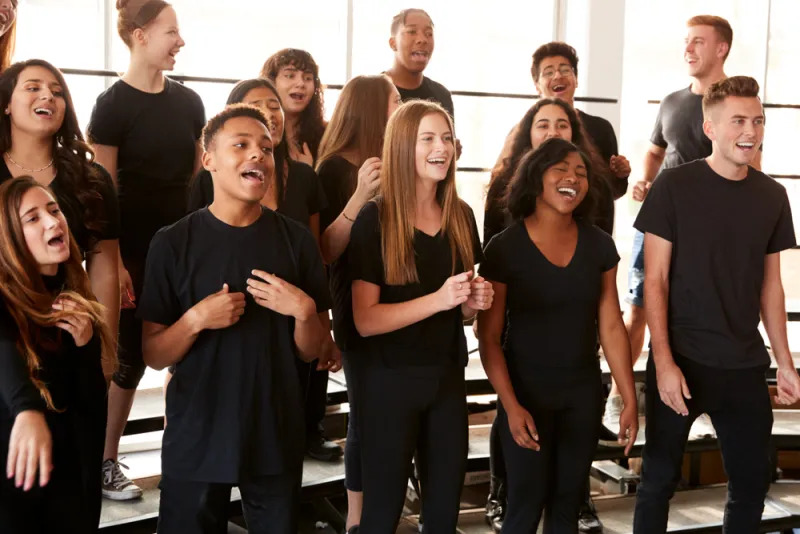
Photo: diverse vocal ensemble group rehearsal singing together on stage, via opus1.io
For most classically trained singers in America, the dream has always looked the same: a record deal, a solo show, your name on the marquee. The whole culture of American music education is basically built around that fantasy. You train hard, you audition relentlessly, and eventually—if you're talented and lucky enough—you make it alone.
So why are so many skilled vocalists quietly walking away from that path?
Over the past few years, something genuinely interesting has been unfolding at the edges of the American music industry. Singers with real credentials—Broadway ensemble experience, indie EP releases, conservatory degrees—are choosing to join choral and vocal ensemble groups instead of grinding toward solo careers. And a big part of that conversation keeps circling back to a model that originated thousands of miles away: the kind of deeply collaborative, community-rooted approach that groups like Bangalore Choir have long championed.
The Pressure Nobody Talks About
Ask any working solo vocalist about their career and they'll probably give you the highlight reel first. The gigs, the recordings, the moments when it all clicked. Push a little harder, though, and a different picture emerges.
"I spent six years trying to make it as a solo artist in New York," says Marcus, a 34-year-old tenor who now sings with a multicultural ensemble in Chicago. "And honestly, it was lonely in a way I didn't expect. Every audition felt like a referendum on your worth as a person. Every rejection was personal. I loved singing but I was starting to hate the career."
That kind of burnout isn't unusual. The solo music industry in America is structured around scarcity and competition. There are only so many record deals, only so many lead roles, only so many headline slots. And the psychological toll of existing in that environment—year after year—can quietly hollow out even the most passionate musician.
Ensemble singing offers something structurally different. The win isn't yours alone, but neither is the loss. That shift turns out to matter enormously.
What Bangalore Choir's Model Actually Demonstrates
When people talk about Bangalore Choir's influence on American vocal culture, they sometimes focus on the obvious stuff—the raga-influenced arrangements, the technical precision, the cross-cultural programming. But musicians who've studied the group closely often point to something less tangible: the relational architecture of how the ensemble operates.
Bangalore Choir has never really been built around featuring individual voices above the collective sound. The whole aesthetic is about what happens when distinct vocal personalities blend into something unified without erasing what makes each voice interesting. That's harder to pull off than it sounds, and it requires a fundamentally different psychological contract between performers.
"There's a generosity in that approach," says Priya, a vocalist and choral director based in Atlanta who has studied Indian classical ensemble traditions extensively. "You're not competing with the person next to you. You're completing them. That's a completely different headspace to perform from."
American vocalists who've encountered this model—whether through direct exposure to Indian classical ensemble performance or through groups that have adopted similar philosophies—frequently describe it as a kind of creative relief.
Ambition Isn't Dead, It Just Looks Different
One of the more persistent myths about ensemble singing is that it's a fallback option. The people who couldn't make it solo. The singers who settled.
Spend any time talking to the vocalists who are actively choosing ensemble careers, though, and that framing falls apart pretty quickly.
"I get asked all the time if I'm still trying to go solo," says Danielle, a mezzo-soprano in her late twenties who left a promising off-Broadway track to join a fusion ensemble in Seattle. "And I have to explain that this is my ambition. Building something with other people, creating a sound that none of us could make individually—that's not giving up. That's the whole point."
What's shifting, arguably, is the definition of musical success itself. For a generation of American singers who grew up watching social media turn every artist into a personal brand, the appeal of belonging to something bigger than yourself carries real weight. Ensemble membership offers identity without the exhausting performance of individuality.
There's also a practical dimension. Ensemble groups—especially those with distinctive programming that draws on global musical traditions—are increasingly finding audiences that solo acts struggle to reach. The concert experience of watching a well-rehearsed vocal ensemble work through a complex arrangement is simply different from a solo show, and a growing slice of American concert-goers are hungry for it.
The Creative Upside Nobody Advertises
Beyond the psychological relief, many vocalists describe genuine creative expansion when they make the move to ensemble work.
Solo careers tend to narrow over time. You find your sound, you protect it, you deliver it consistently. That's the job. Ensemble singing, by contrast, demands constant adaptation. Your voice has to respond to what's happening around it in real time. You develop listening skills that solo performance rarely requires.
"I learned more about my own voice in the first year of ensemble singing than I did in four years of conservatory training," Marcus says. "Because I had to hear myself in relation to other people. I couldn't just do my thing and hope it landed."
For singers who've engaged with Indian classical vocal traditions—even at the surface level—this emphasis on responsive, relational singing feels familiar. Carnatic and Hindustani ensemble contexts have always valued the interplay between voices as much as individual technical display. That's a different pedagogical tradition than most American music schools operate from, and the contrast is instructive.
A Shift the Industry Hasn't Fully Caught Up With
Record labels, talent agencies, and music industry infrastructure in the US are still largely organized around the solo artist model. Ensemble groups—especially those that don't fit neatly into the "choir" or "a cappella" boxes—often find themselves navigating a business landscape that wasn't built for them.
But audiences are ahead of the industry on this one. Fusion ensembles, multicultural choral groups, and vocally driven collectives are selling out shows in cities across the country. The appetite is real, even if the infrastructure is still catching up.
And for the vocalists making this choice, the business awkwardness is a price worth paying.
"I used to measure my career in terms of what I'd achieved alone," Danielle says. "Now I measure it by what we've built together. That's not a consolation prize. That's just a better way to live."
The spotlight, it turns out, isn't the only place worth standing.